Monday, February 6, 2012

Pennington Porch Addition

Pennington Porch Design
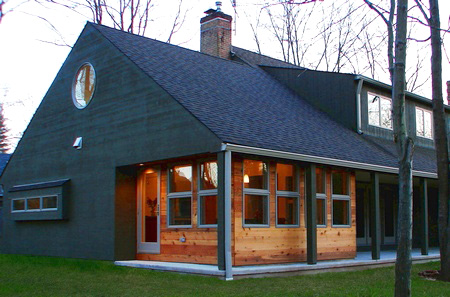
For several years now, the owners of this Pennington home had been dreaming about adding a porch to the front of their house.  This year, with the help of A&E's excellent design, this dream was realized and a new porch was born!

A&E began by making a conceptual drawing of the proposed addition. As you can see from the design picture, we were able to create a smooth transition from the home to the garage while also adding street appeal with a natural stone veneer on the porch and the stairs.  

The columns on the outside resonate with a traditional porch design while the stone adds a distinct texturing to the original exterior of the home.
Early on in planning our designs, we overcame a challenge with the existing low pitched shingled roof.  Because this type of roof didn't allow for a conventional porch roof system, A&E succeeded in creating a flat roof system made of fiberglass.  

A flat roof system helped tie in the main house to the garage while also providing proper drainage. 

Fiberglass roofing is a lesser-known roofing choice, but it is great for dressing up the exterior of a house while providing a functional, durable surface. The new fiberglass roof on this porch is further complimented by a hidden gutter and an elegant perimeter of crown molding. 

Keeping the interest of ease of maintenance in mind, we installed Polyvinyl Chloride (PVC) posts for support.  These PVC posts take on the appearance of an elegant wood construction, but don't require nearly the same amount of maintenance. 

In addition to building this porch, the owners of the home wanted to incorporate a stone element to the design. A&E accomplished this by installing field stone walls on the perimeter. 
Natural Stone Veneer and Walkway
These stone walls created an elegant transition to the blue stone walkway and also serve as a natural outline for the surrounding flower beds. 

Our Pennington porch project also includes a beat-board ceiling with recess lighting for a nice warm glow at night.  You can check out more of A&E Construction's Princeton and Hopewell specialty projects  in our portfolio

Stay tuned for an upcoming post on the finished porch to see the stone base for the post light as well as the installation of light aluminum railings and a rich mahogany capping. 

Tuesday, January 3, 2012

2012 Home Energy Improvement Incentives

Happy New Year everyone!  We gave you an extensive preview of the new HPwES 2012 program rebates and incentives in our last post, so today we want to give you an easy diagram to follow in case you're interested in making home energy efficiency improvements within the next year.

2012 HPwES Benefits and Incentives

As we noted in our previous post, the 2012 incentives improved over the past year with increased rebate amounts and increased loan amounts.

Here's an example of what would be considered a Tier 3 category:

The Jones family has an A&E audit performed and the audit information shows a potential energy savings of more than 20%, but less than 25%.  The Jones family qualifies for a 50% cash rebate up to $4,000 and a 0% interest loan up to $10,000 from the HPwES program.

If you have any questions or would like to schedule an energy audit, contact us today. 

Thursday, December 22, 2011

New Year's Resolution That Will Keep You Comfy & Save You Money

Make a New Year’s Resolution to cut your energy bills and spend no out of pocket money on your home improvements with New Jersey’s Clean Energy Program


This winter, NJ homeowners can save money and improve their home’s energy usage and comfort with the new incentives from the program’s Home Performance with Energy Star (HPeWS) promotion.  With rebates of up to $5,000, 10 year no interest loans and energy savings of up to 30 percent, it’s prime time to make home improvements and get rewarded for it.

To give you an idea of how the program works, if a homeowner attains total energy savings of less than 20% and more than 10%, they can qualify for up to $2,000 in rebates and a 10 year no interest loan up to $5,000. This includes work such as air sealing, insulation, hot water heater, duct sealing, and duct insulation. 

Therefore, a homeowner could potentially receive free money, cut monthly energy bills, and pay about $40 a month towards the loan for their improvements. For homeowners who make increased energy savings of 20% or greater, the incentives are raised even higher with rebates of up to $5,000 and a 10 year no interest loan up to $10,000.

The new 2012 incentives are better than those offered in all previous programs and really give homeowners a golden opportunity for lowering their energy bills while increasing the comfort and efficiency of their home. The program kicks off starting January 1st and will be available for the entire year. 
The first step to obtaining these incentives is to get an energy audit from a certified contractor like A&E Construction.

With over 25 years of experience in building and construction, A&E has performed numerous home energy improvements in the local Princeton area. Our team of experts can guide you through the process of making energy improvements as well as utilizing all financial incentives available through HPeWS.

Energy audits typically take between three to four hours to complete and include multiple assessments of heating and cooling equipment, insulation, air sealing, windows, doors, appliances and lighting.  For safety concerns, we also perform a carbon monoxide and gas leak test. A&E’s auditor will perform a thorough exam of the house by looking for areas where a homeowner can save on their bills as well as testing equipment and identifying moisture and air-flow issues. 

After the audit, we will provide a comprehensive and detailed report of your home's energy losses or problems outlining recommended measures as well as how to qualify for the financial incentives ofthe HPeWS program.

A strong advantage of selecting A&E to perform your energy improvements is that we bring excellent knowledge of your home’s construction and systems, thus being able to better analyze where energy is lost and how to make the most out of the improvement. 

In addition to being in our 3rd year participating in the HPeWS program, A&E Construction is a Building Performance Institute (BPI) certified contractor with a qualified team. Our four BPI certified energy professionals are trained and certified in building analyst, envelope, heating, air conditioning & heat pump, and whole house air leakage.

Friday, November 11, 2011

How to Power Your Home with a Portable / Emergency Generator


We’ve all heard horror stories about friends and family who went without power for days or even weeks recently. Today we’d like to discuss how you can prepare your home from power outages using an emergency backup generator.

We highly recommend getting a portable generator and installing a transfer switch to provide an alternate source of power for your home.  A transfer switch will allow you to power your primary circuits such as heat, sump pumps, well pumps, refrigerator, lighting or even a T.V. for fans who don’t want to miss the big game!

This system is an inexpensive way to provide you with extra security in the event you lose power.  To activate this system you simply plug in the portable generator into the transfer switch outlet and place the transfer switch in the emergency position. When your power returns, other appliances or lights that are not run through the emergency generator will turn on; thus alerting you to flip the transfer switch back to the normal position.

How to Install a Portable Generator for Emergency Home Power


Installing this kind of system typically costs between $975 and $1250, excluding the cost of a portable generator.  A&E installs emergency backup systems and can provide you with information on purchasing a generator.

Transfer switches have the capability for either 6 circuits or 10 circuits.  You will also need a good portable generator that produces about 7500 watts/30 amps in order to run up to 10 circuits.  A good portable generator will cost anywhere from $800 to $1500 and can be purchased online and delivered directly to your home.

Transfer switches come in handy if you often lose power during storms or if you want a backup source of power in the event of an emergency.

They are much more convenient (and safer!) than running multiple extension cords around your home.  

Unlike extension cords, you can also run devices that are not connected to a cord such as heaters and well pumps. Most importantly for homeowners, transfer switches are incredibly simple to use.

Don't hesitate to contact A&E Construction for information on buying a portable generator or if you are interested in installing an emergency backup system in your home.